
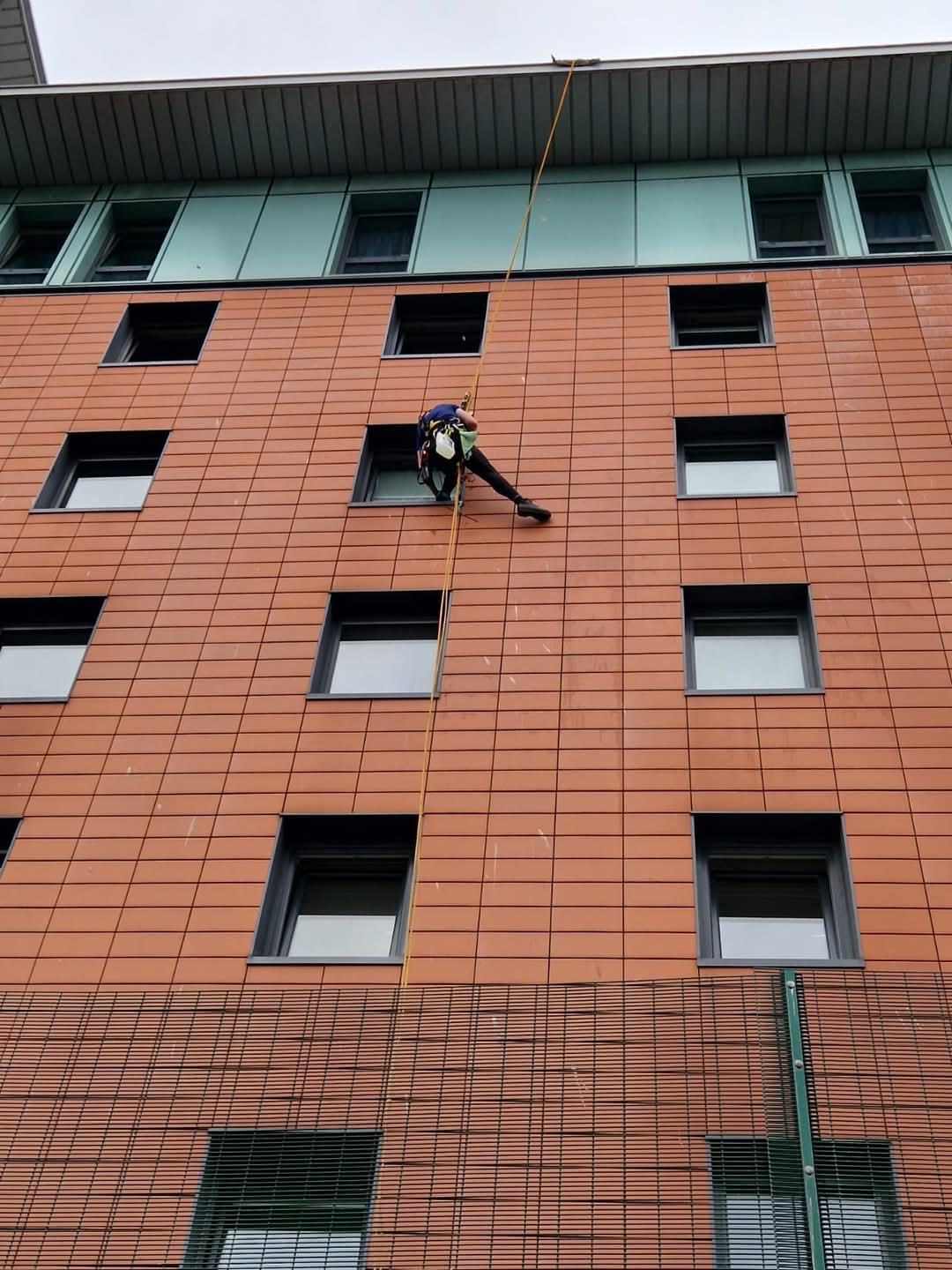
Rope access in Dundee for the waterfront, campuses and city centre
IRATA certified technicians clean and maintain Dundee's tall buildings from ropes, from new glass on the waterfront to older stone in the centre, with a Level 3 supervisor and at least two people on every job.
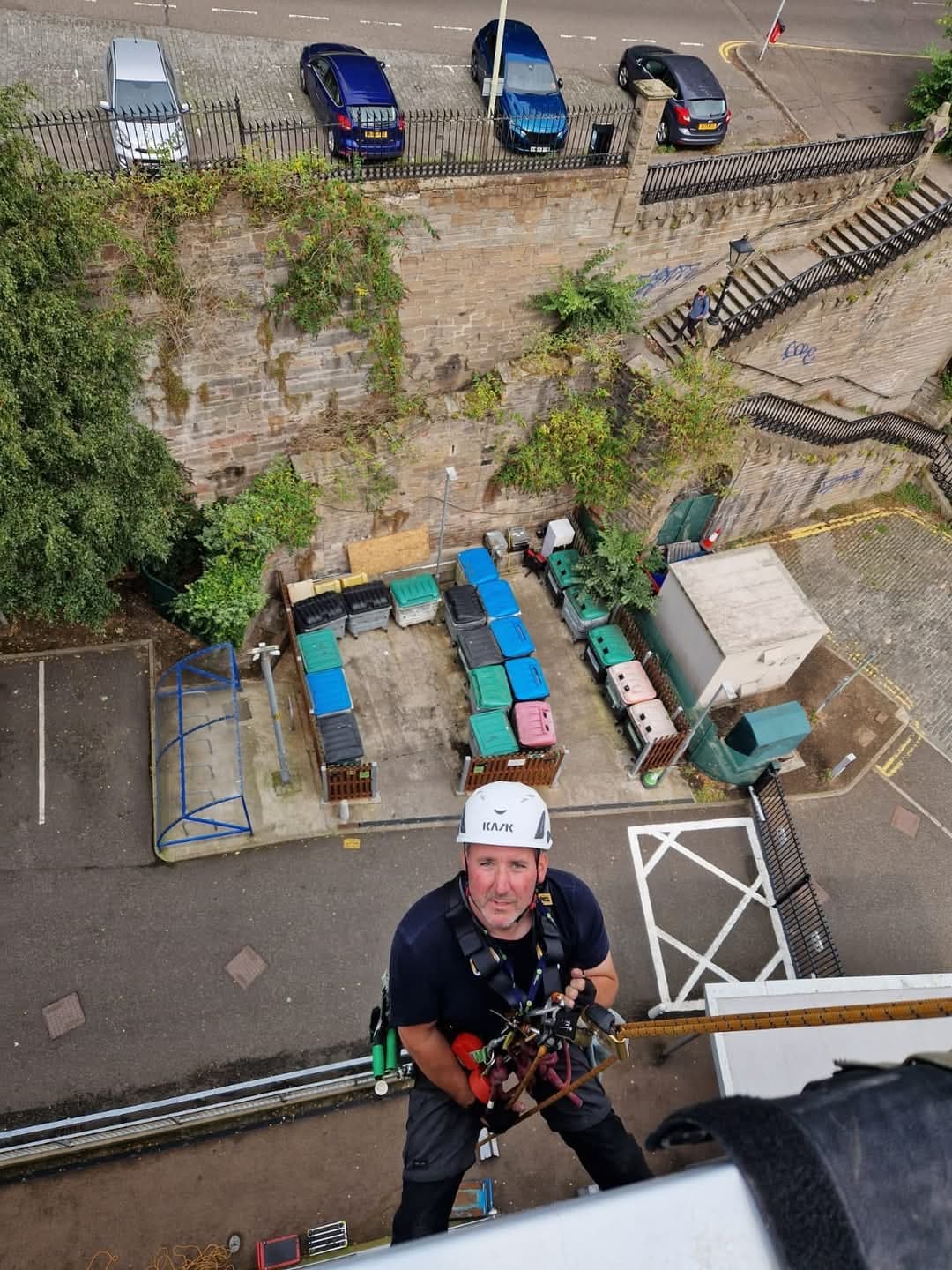
Rope access Dundee
Reaching Dundee's high places
The new buildings around Dundee's waterfront are tall and heavily glazed, and the university campuses and city centre have plenty of high stone and brick. Scaffolding any of them for routine cleaning or small repairs means cost, delay and blocked pavements.
We use ropes instead, working down each face in planned drops. After a site visit, the work usually starts within two to three days, sooner in an emergency, and the team comes up from Edinburgh for it.
Read how every job is planned on our rope access page, or see our Dundee area page for our other services here.
In Dundee our rope access team carries out:
- Glazing and window cleaning at height
- Facade and cladding cleaning
- Gutter clearing on high roofs
- Inspections of roofs and elevations, depending on what's involved
- Mastic and sealant work around windows
- Bird spiking
Every Dundee drop, planned
Safety is set out before anyone goes over the edge.
IRATA certified team
Level 3 supervision
Never fewer than two
Written rescue plan
Risk assessments and method statements come before the work, every time.
Rope access in and around Dundee
We carry out rope access at Dundee's waterfront, city centre, campuses and business parks, including:
Perth, Arbroath, Forfar and Carnoustie are covered too.
- Dundee city centre
- Dundee Waterfront
- The University of Dundee campus
- Abertay University
- Dundee Technology Park
- Michelin Scotland Innovation Parc
- Wester Gourdie industrial estate
- Baldovie industrial estate
How a Dundee rope access job runs
- 1
Site visit
We come up to check the anchors, the drop zones and exactly what needs doing.
- 2
Paperwork
You get the written price, the RAMS and the rescue plan.
- 3
Work
We're usually on the ropes within two to three days of the visit.
Request a rope access survey in Dundee
- Call us0131 235 2031
- Request a surveyUse the form below
Rope access Dundee questions
How does the abseiling window cleaning work?
Our IRATA certified technicians fix their ropes to anchors on the roof and clean each section of glass on the way down. A Level 3 supervisor is on site and there are at least two people on every Dundee job, with a rescue plan agreed beforehand. We clean the glass and frames with purified water, so they dry without streaks. Nothing is built against the building, so the street and entrances below stay open.
What is IRATA and what makes it the global standard for industrial rope access?
IRATA International is the trade body that sets the training, assessment and working rules for industrial rope access. Its system is used around the world, which is why clients and insurers treat it as the benchmark. Technicians are certified at three levels and must keep their certification current, and every job is supervised by a Level 3 technician. Our Dundee rope access work is carried out by IRATA certified technicians under that system.
Can cleaners reach tenement windows?
By rope access, yes. For property factors and managing agents we clean high glazing on whole tenement blocks from ropes, with no scaffolding against the building. One quote covers the block, so the factor can share it with the owners. Stairs and back greens stay usable, because nothing stands on the ground except a small marked drop zone.
Is rope access safe?
Yes, it has a strong safety record when trained people work to a proper plan. On Dundee jobs every technician is attached to two ropes, each on its own anchor, so one always backs up the other. The work is supervised by an IRATA Level 3 technician, and there are never fewer than two people on the job. A written rescue plan means a technician can be brought down quickly if anything goes wrong.
What are the benefits of rope access for building maintenance?
The main benefits are speed, low disruption and reach. There's no scaffold to put up, so work can start soon after the site visit, and the street below needs only a small drop zone. Technicians reach glazing, gutters, sealant and ledges that a pole can't, often covering several jobs in one visit. On Dundee's waterfront glass and older city centre stone alike, the building stays open while we work.
What types of projects can rope access be used for?
Rope access suits projects at height that are light, short or hard to reach any other way. In Dundee we use it for cleaning glazing and cladding, clearing high gutters, renewing window mastic and sealant, fitting bird spikes and inspecting roofs and elevations. That covers glass towers on the waterfront as well as stone buildings at the University of Dundee and in the city centre. Masonry repairs and heavy building work aren't something we take on.
Who is responsible for safety, the contractor or the FM?
Both have duties, but the contractor is responsible for how the work at height is planned and carried out. As the client, the facilities manager should check the contractor is competent, share what they know about the building and keep any fixed anchors maintained and tested. We supply the risk assessment, method statement and rescue plan before work, and a Level 3 supervisor runs the job on site. For Dundee buildings, we agree site rules such as access times and signing in with you at the visit.
Can you install bird spikes at height?
Yes, we fit bird spikes to high ledges, sills and signs from ropes. Pigeons and gulls roosting on a building leave droppings that mark the facade and the pavement, and spikes stop them settling. In Dundee, where gulls are common around the waterfront and city centre roofs, spiking ledges on the same visit as a clean saves a second set-up. We'll show you which ledges need it at the survey.
More from us in Dundee: