
Rope access in Fife for campuses, industrial estates and the coast
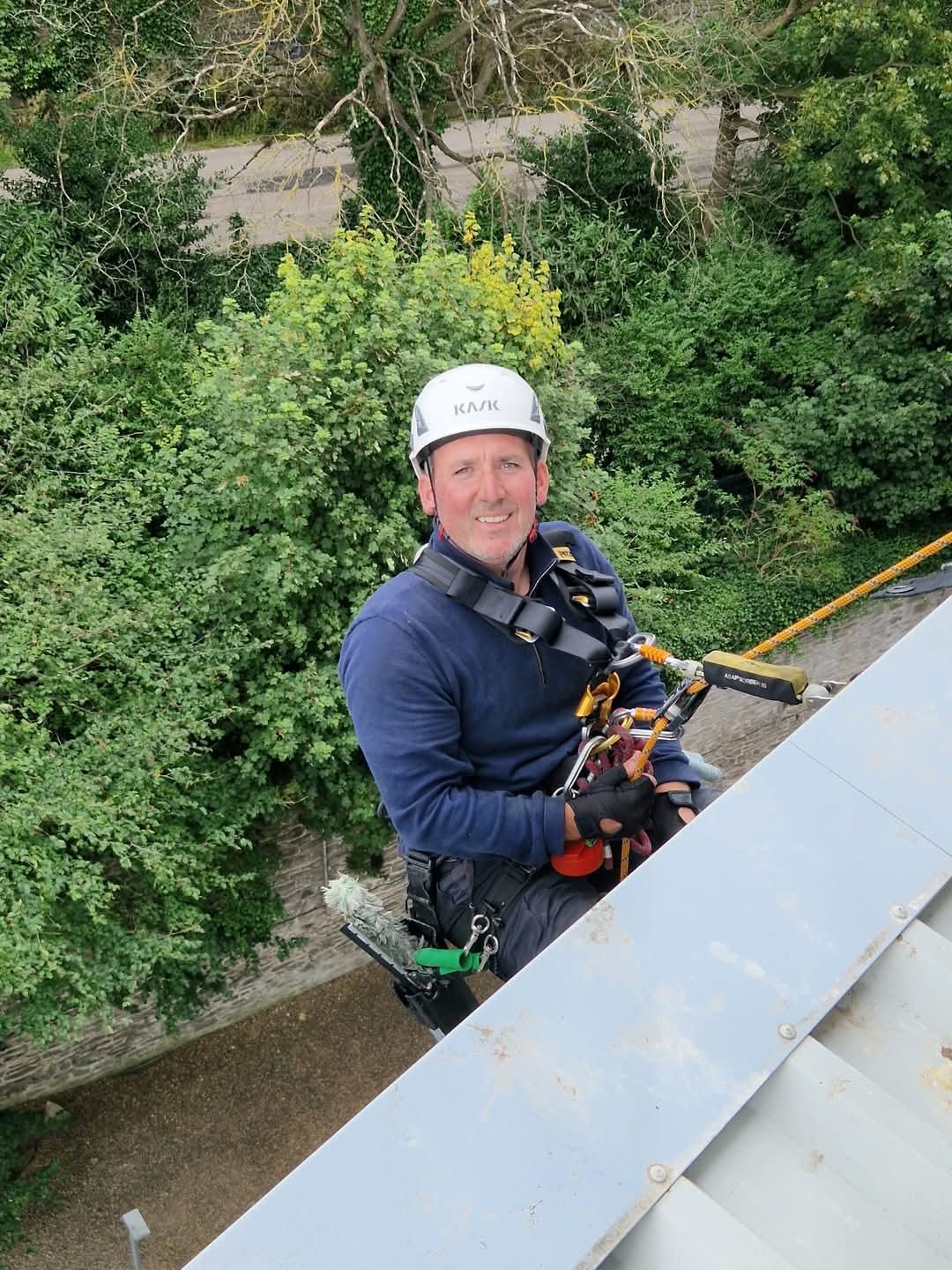
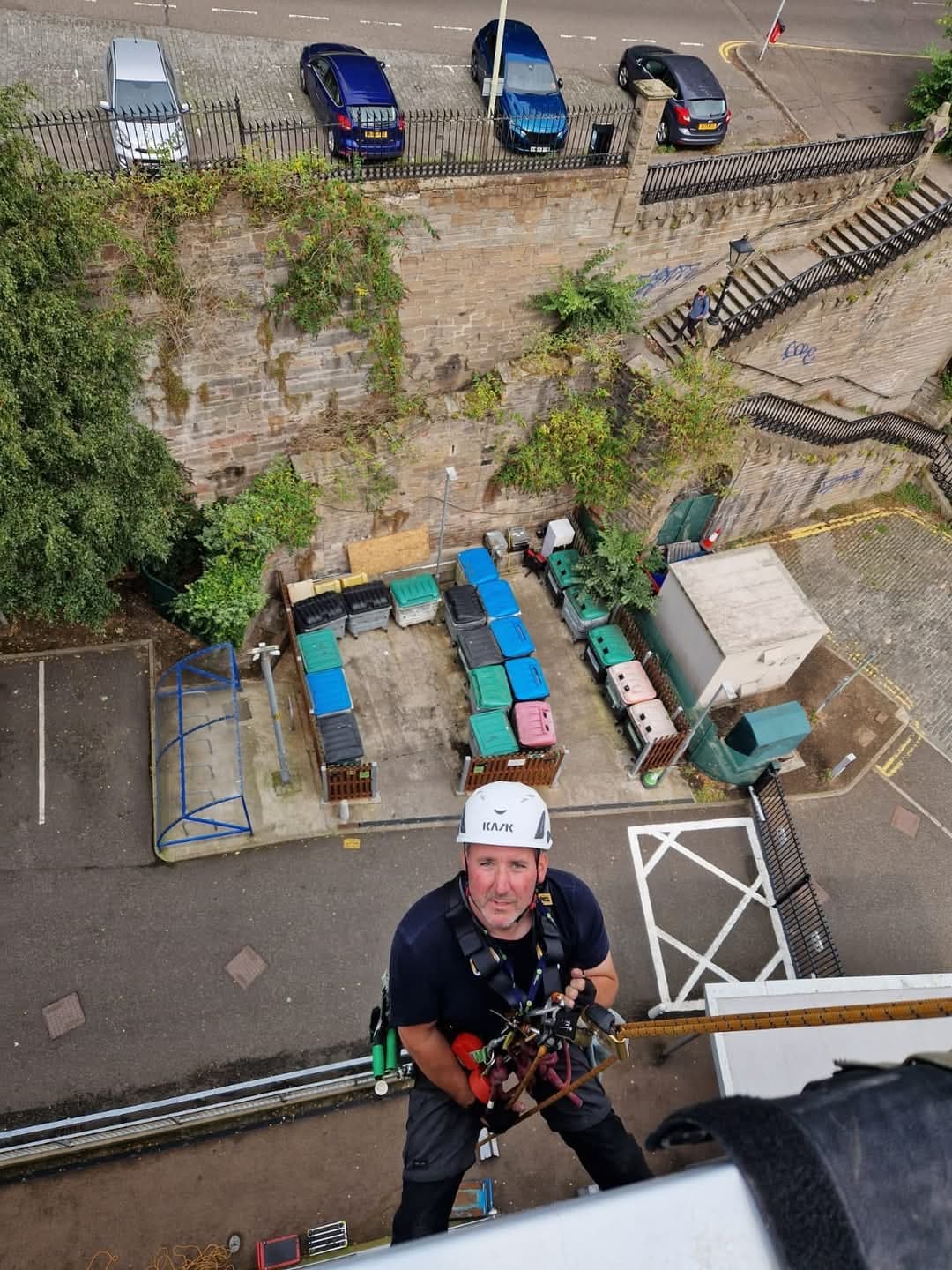
IRATA certified technicians clean, inspect and maintain the taller and harder-to-reach buildings of Fife from ropes, whether that's university stone in St Andrews or a high industrial unit in Glenrothes, with a Level 3 supervisor and at least two people on site.
Rope access Fife
Height without the scaffold
Fife's tall buildings are spread across the whole region: stone university buildings and halls in St Andrews, big industrial units on the Glenrothes estates, and exposed sites on the coast at Methil, where wind and salt off the Firth wear down sealant and glazing. Scaffolding any of them for a clean or a small repair ties up the site for longer than the job itself.
We work down each elevation on ropes instead. The team comes over the Forth from Edinburgh for a site visit, and the work usually begins within a few days of it, sooner if something's urgent.
How every rope job is planned is set out on our rope access page, and what else we offer in the region is on our Fife cleaning contractors page.
Across Fife our rope access team handles:
- High glazing and window cleaning
- Stone and cladding facade cleaning
- Gutters on tall roofs
- Roof and chimney inspections with photos
- Window mastic and sealant work
- Bird spiking on ledges
Every Fife drop, properly run
Planned, supervised and written down before the first rope goes over the edge.
IRATA certified technicians
Level 3 supervisor on every job
At least two on site
RAMS before we arrive
A rescue plan is part of the paperwork for every rope access job we take on in Fife.
Rope access around Fife
We take on rope access at Fife's campuses, town centres, industrial estates and energy sites, including:
Our rope access covers Glenrothes, Leven, Methil, St Andrews, Cupar and the towns between them.
- University of St Andrews
- Eden Campus, Guardbridge
- St Andrews town centre
- Glenrothes town centre
- Queensway industrial estate, Glenrothes
- Southfield industrial estate, Glenrothes
- Fife Energy Park, Methil
- Leven town centre
- Cupar town centre
A Fife rope access job
- 1
Visit
We come over to find the anchor points, mark out the drop zones and agree exactly what's to be done.
- 2
Paperwork
The written price, risk assessment, method statement and rescue plan all reach you before the work.
- 3
Ropes
Work normally starts a few days after the visit, and sooner when there's an emergency.
Request a rope access survey in Fife
- Call us0131 235 2031
- Request a surveyUse the form below
Rope access Fife questions
How safe is rope access?
It's one of the safest ways to work at height, provided the job is planned and supervised properly. Our IRATA certified technicians always work with at least two people on site and a Level 3 supervisor in charge of every Fife job. Two ropes on independent anchors mean there's always a backup, and the rescue plan is written before anyone leaves the roof. A fenced drop zone keeps people clear of the area below.
What are the required qualifications for rope access work in the UK?
In the UK, rope access technicians should hold IRATA certification, gained through training and an independent assessment at Level 1, Level 2 or Level 3. The work also has to follow the Work at Height Regulations, with a supervisor qualified at Level 3 on site. For a building owner, it's worth asking for the technicians' certificates as well as health and safety accreditation such as CHAS or SafeContractor. Our Fife team is IRATA certified and we hold both.
Are industrial rope access services only suitable for high-rise buildings?
No, rope access works on low and mid-rise buildings too, wherever a ladder isn't safe and a pole won't reach. In Fife that includes industrial units on the Queensway and Southfield industrial estates in Glenrothes, where roof edges, gutters and high cladding sit above yards full of vehicles. It's also useful over glass canopies, steep banks and other places a machine can't stand. What matters is safe roof access and something to anchor to.
Can industrial rope access services be used for bird control?
Yes, we fit bird spikes to ledges, sills and signs from ropes. Gulls and pigeons are a problem on many Fife buildings, from the coast at Levenmouth to St Andrews, and their droppings stain facades and make walkways slippery. Spiking the ledges they use stops them settling there. It's easy to add to a cleaning visit, so the ledges are cleaned first and then spiked.
Why choose rope access for difficult or restricted sites?
Because ropes need very little space and can reach places no scaffold can. On restricted Fife sites such as Fife Energy Park in Methil, a working yard or quayside can stay in use, with only a small drop zone below the technician. There's nothing to deliver or erect, so the work can be finished and cleared quickly. Our site-specific risk assessment covers any site rules, permits to work and inductions you need.
Is rope access cost-effective for clients?
Usually, yes, especially for cleaning, inspections and short jobs at height. There's no scaffold to hire, no road closure to pay for and less time on site, so more of the cost goes on the work itself. For buildings in Cupar, St Andrews or Glenrothes, combining cleaning, gutter clearing and inspection in one visit makes it better value still. We'll give you a written quote after a free survey so you can compare.
What types of buildings can use industrial rope access services?
Almost any building with a safe roof and something to anchor to can use rope access. Across Fife we work on offices, industrial units, university buildings, hotels, student accommodation and retail units. At the University of St Andrews and in older town centres such as Cupar, it also suits traditional stone buildings where a scaffold would be hard to place. We'll check your building's anchors and drop zones at the site visit.
Does the client have any responsibility for a contractor's safety?
Yes, the client has duties too, even though the contractor plans and controls the work at height. Under health and safety law, you should choose a competent contractor, share what you know about the site and its hazards, and keep fixed anchors maintained. We make that easier by sending our risk assessment, method statement, rescue plan and accreditation before work starts. For Fife sites with their own rules, we'll follow your induction and permit process.
More from us in Fife: