
Rope access in Stirling for campus buildings, offices and old stone
IRATA certified technicians work from ropes on Stirling's tall and awkward elevations, from the office glazing at Castle Business Park to the stone of the old town, with a Level 3 supervisor and at least two people on each job.
Rope access Stirling
Height without the scaffold
Stirling's old town climbs the hill towards the castle, and its narrow streets leave little room for a scaffold on the pavement. Out at the university campus and the business parks the buildings are newer, but above the first floor they're just as hard to reach.
Ropes let our technicians work down each elevation in planned drops and pack everything away at the end of the day. We come through from Edinburgh for a site visit first, and the work usually starts within a few days of it, sooner in an emergency.
How we plan each drop is set out on our rope access page, and our Stirling area page shows what else we take on in the city.
In Stirling we use ropes for:
- High glazing and window cleaning
- Stone and cladding facades
- Gutters beyond a ground-level vacuum
- Roof and chimney inspections, photographed
- Window mastic and sealant
- Bird spikes on ledges
Recent work in Stirling
High windows from ropes
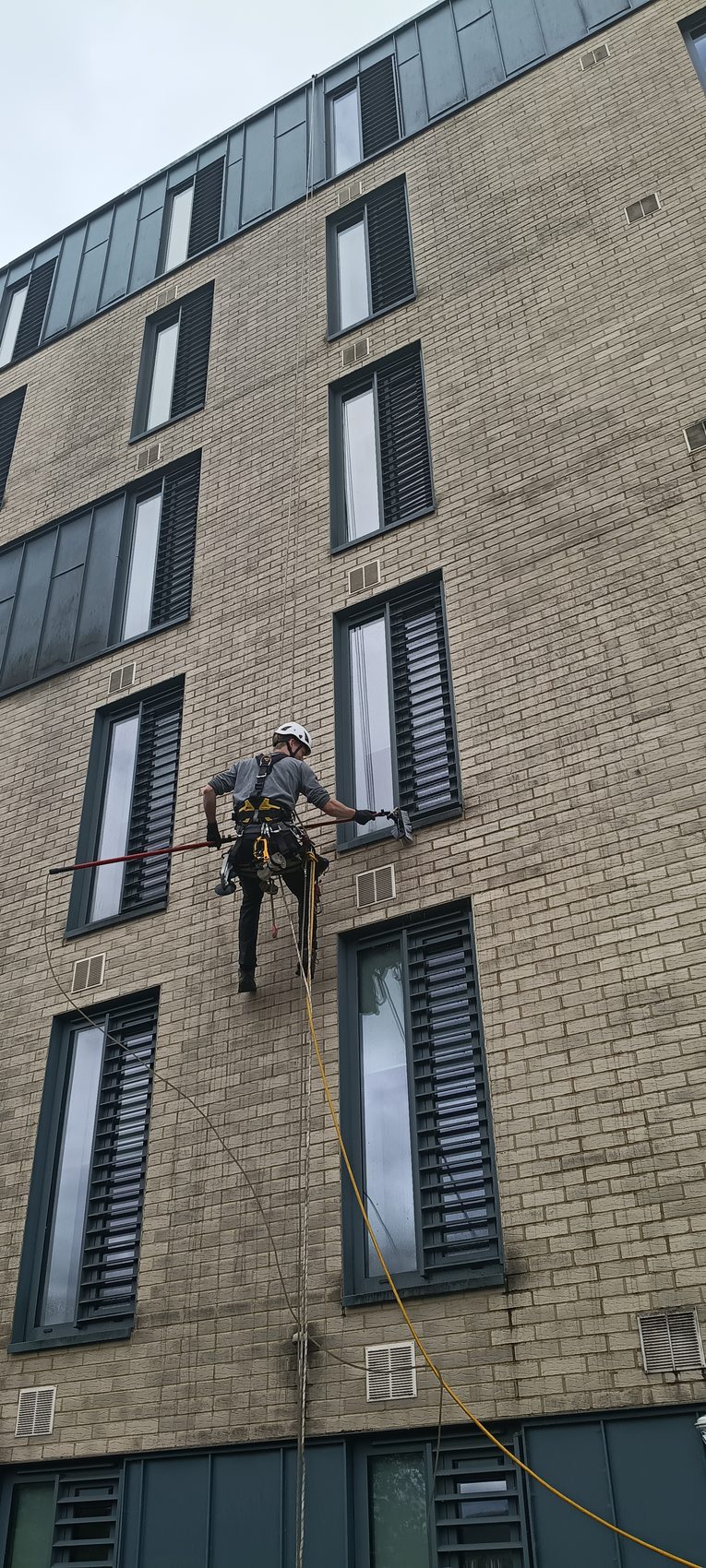
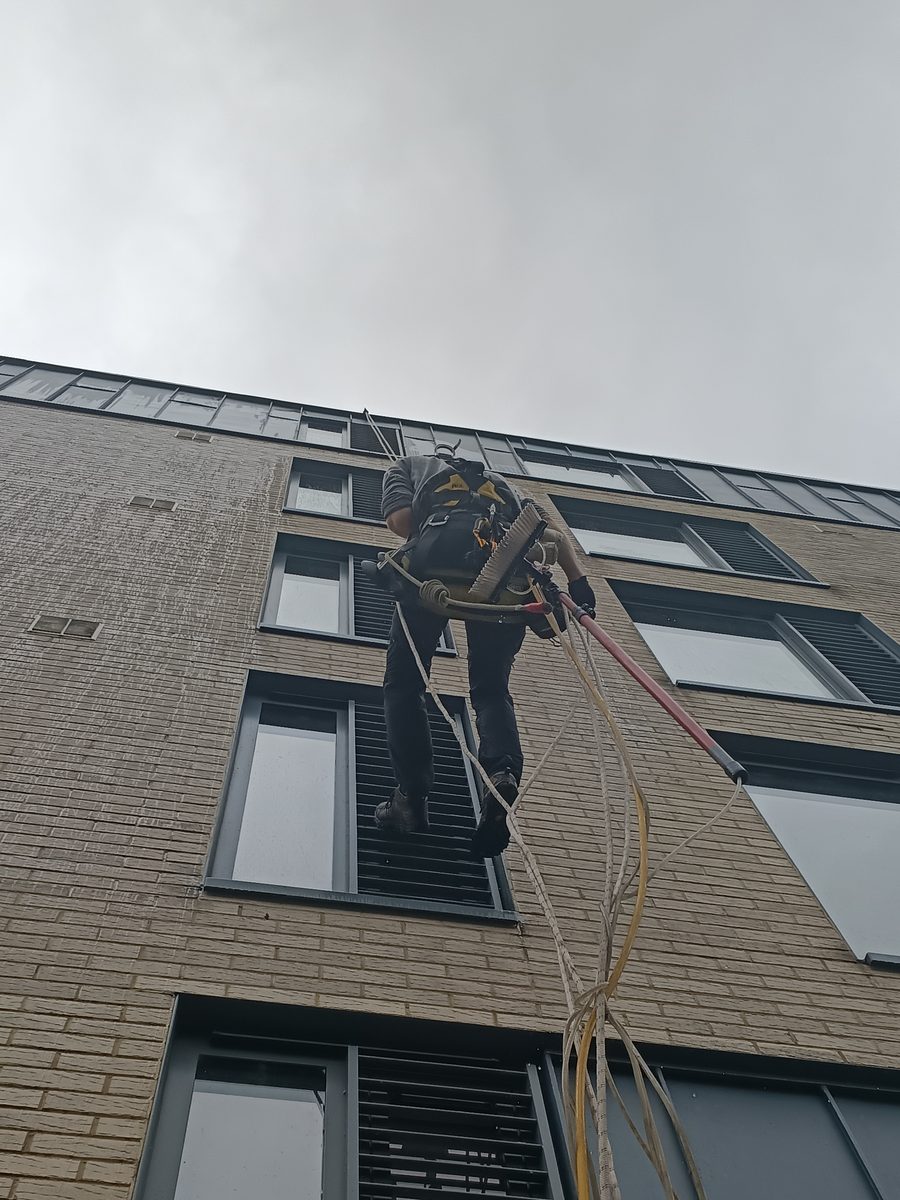
Our technicians cleaned the upper windows of a buff brick block in Stirling from ropes, scrubbing each pane with a brush on a short pole as they worked down.
Rigged from the roof
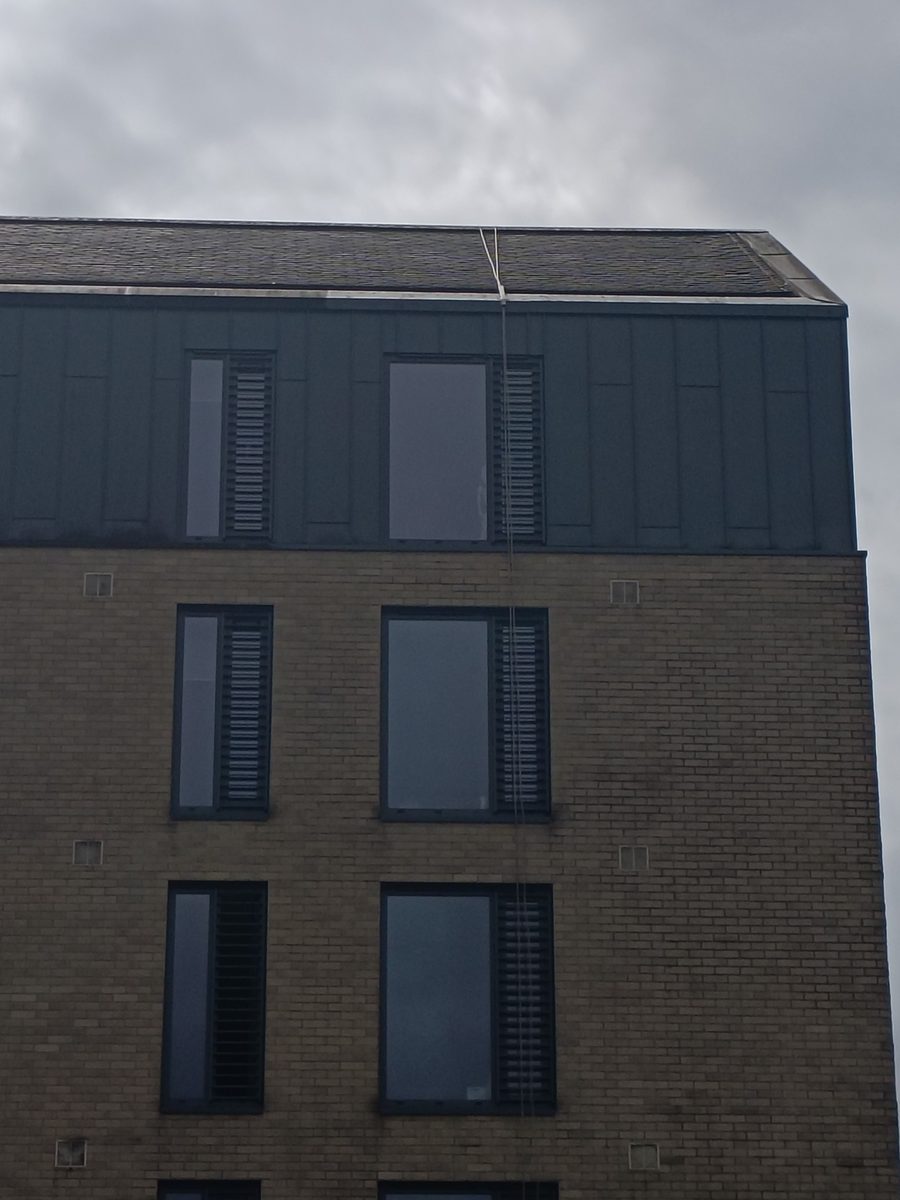
On the same building the ropes hung from anchors on the roof, so nothing had to be built against the wall or left standing on the ground.
A second block
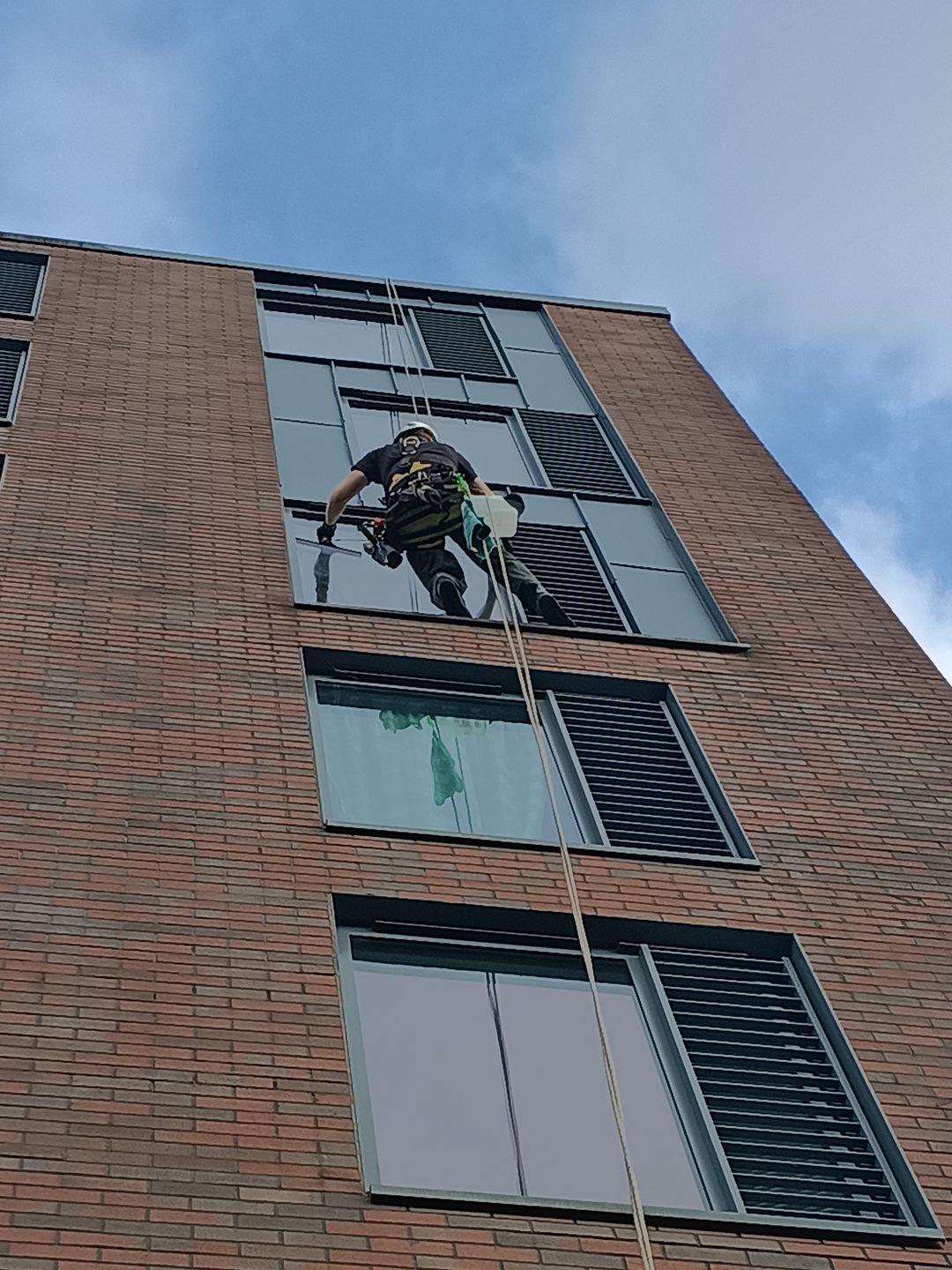
Days later the team was on a red brick block in Stirling, cleaning its windows and glazed panels from ropes in the same way.
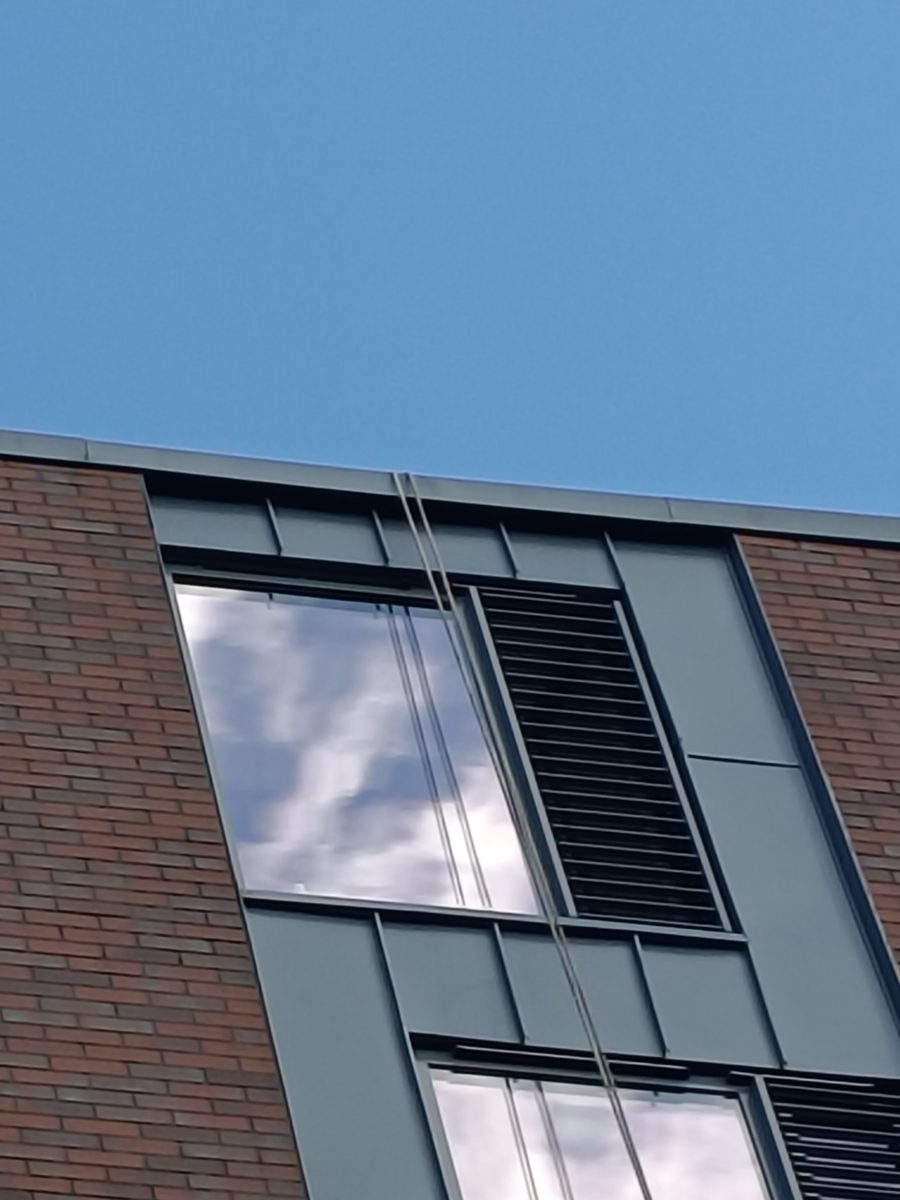
Supervised drops on Stirling buildings
Every rope job is planned before the first anchor goes in.
IRATA certified technicians
Level 3 supervisor on site
At least two people
RAMS before we start
The rescue plan, risk assessment and method statement are with you before the team sets off from Edinburgh.
Rope access in and around Stirling
We work from ropes in the city centre, at the university and on Stirling's business parks and industrial estates, including:
Beyond the city, our rope access work also reaches Bridge of Allan, Dunblane, Falkirk and Alloa.
- Stirling city centre
- The Thistles shopping centre
- Castle Business Park
- Stirling University Innovation Park
- University of Stirling campus
- Springkerse industrial estate
- Bandeath industrial estate
A Stirling rope access job, start to finish
- 1
Visit
We come through to check the anchor points, the drop zones and the access at street level.
- 2
Paperwork
The written price, the RAMS and the rescue plan follow on from the visit.
- 3
Ropes
Our team is usually on the building within a few days of that survey.
Request a rope access survey in Stirling
- Call us0131 235 2031
- Request a surveyUse the form below
Rope access Stirling questions
How safe is rope access?
Rope access is very safe when it's planned properly and carried out by trained technicians. On Stirling jobs our technicians are IRATA certified, a Level 3 supervisor is on site, and there are always at least two people working. Each technician hangs from two ropes on separate anchors, and a written rescue plan is agreed before the first drop. You'll have the risk assessment and method statement before we arrive.
Is my building compatible?
Most buildings are compatible with rope access, as long as there's safe roof access and something strong to anchor the ropes to. That might be fixed abseil anchors, steelwork or a suitable part of the roof structure. In Stirling we see everything from offices at Castle Business Park to units on the Springkerse and Bandeath industrial estates, and each one is checked at the site visit. If ropes aren't the right answer for your building, we'll say so.
How does rope access compare to traditional methods for working at height?
For cleaning and light work at height, rope access is usually quicker, tidier and better value than scaffolding. There's nothing to build against the wall, so the work can start soon after the site visit and the pavement stays open apart from a small drop zone. That matters beside busy places like the Thistles shopping centre in Stirling city centre. Scaffolding still makes sense for long, heavy building work where materials have to sit at height for weeks.
How long does a typical rope access project take?
There's no typical length, because it depends on the size of the building, the number of drops and the work being done. A single elevation of glass is quick, while inspecting, cleaning and resealing a whole campus building takes longer. After the site visit we'll tell you how long your Stirling job should take and agree the dates with you. Rigging is fast, since there's no scaffold to put up first.
Can rope access be used for inspections and surveys?
Yes, and what the inspection covers depends on what's involved. Our technicians can inspect roofs, chimney stacks, gutters and elevations from ropes and photograph what they find, so you see any problem before booking repairs. On older stone buildings in Stirling city centre, that's often the only practical way to look closely at high stonework. Tell us what you need to know and we'll say whether an inspection from ropes will answer it.
Can rope access be used for high-level mastic works?
Yes, renewing window mastic and sealant is one of the jobs we carry out from ropes. Old, cracked sealant lets water in around frames, and on upper floors it's hard to replace without access equipment. Our technicians renew it from the ropes along each drop, without scaffolding. In Stirling it suits offices at Stirling University Innovation Park and campus buildings where windows leak or let in draughts.
How much does rope access cost in Stirling?
The cost depends on the height of the building, how many drops are needed, how easy the roof and anchors are to reach and what the work involves. A single clean of one face is priced very differently from a full inspection and reseal. We visit Stirling buildings for free, then send a clear written quote. Because there's no scaffold hire, rope access often costs less than the alternatives for short jobs.
When should high level cleaning be scheduled?
High level cleaning is best scheduled for the drier, calmer months, and booked early, because outside work gets busy from spring. Ropes can't be used safely in high winds or heavy rain, so autumn and winter dates carry more risk of rebooking. For offices and the University of Stirling campus, quieter times such as weekends or holidays keep the drop zones clear of people. We'll suggest dates that suit your building at the survey.
More from us in Stirling: